Water Damage Restoration in Phoenix, AZ
A burst pipe, slab leak or monsoon water in the house can't wait. Call now, any hour. One call connects you with a local Phoenix restoration company that can start drying your home. The call is free and you're not obligated to hire anyone.
What's going on at your place?
Most water damage in the Valley starts with one of these. If yours is on the list, it can be dried out properly.
Burst supply line
The braided hose under a sink, toilet or fridge lets go. Rubber inside those lines ages fast in our heat. Turn the little valve behind the fixture, or the main shutoff, then call.
Slab leak
Most Phoenix houses sit on a concrete slab with copper or PEX running underneath. When a pipe springs a pinhole down there, water comes up through tile seams and soaks baseboards from below.
Water heater
Tanks in the garage or a hall closet rust through at the bottom after enough years of hard water. Sometimes it's a slow puddle. Sometimes it's 40 or 50 gallons at once.
AC condensate line
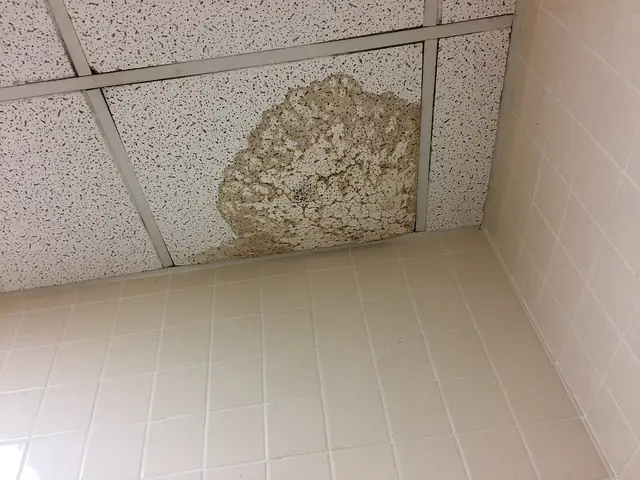
Your air handler pulls a lot of water out of the air in summer. If the drain line clogs, the pan overflows and you get a brown ring on the ceiling under the attic unit, usually in July.
Monsoon roof leak
Flat roofs with parapet walls depend on scuppers to drain. One clogged scupper during a storm and water backs up under the roofing and into the ceiling.
Swamp cooler overflow
A stuck float valve on a rooftop cooler can run water all day. It finds its way down the duct or the roof deck, and you notice it as a stain or a sagging ceiling.
What should you do in the first hour after water damage?
Stop the water, stay safe around electricity, take photos, and get a restoration company headed your way. The faster wet materials are dried, the less you'll need to tear out later.
- Shut off the water. The main is usually in a box near the street or where the line enters the house. For a single fixture, use the valve behind it.
- Kill the power to wet areas at the breaker, but only if you can reach the panel without standing in water.
- Take photos and video before you move anything. Your insurance adjuster will want to see it as it was.
- Move what you can off wet carpet. Rugs, furniture with wood legs, boxes, electronics.
- Call us at (XXX) XXX-XXXX and we'll connect you with a local water damage restoration company.
Why water damage acts differently in Phoenix
People figure that with humidity in the single digits half the year, anything wet will just dry on its own. The surface does. The carpet feels dry by evening. But water that got under baseboards, into the bottom of drywall or under laminate stays there, and that's where the smell and the mold come from a few weeks later.
Our water is hard. The minerals wear on copper pipes, water heater tanks and the fittings on every supply line. That's a big reason pinhole leaks and slab leaks are so common here, especially in houses built in the 1970s and 1980s.
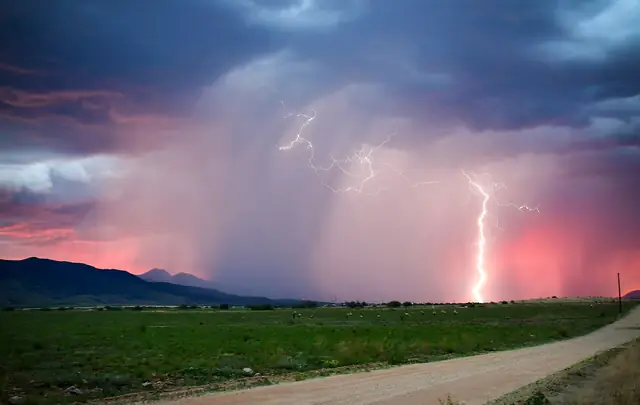
Then there's the season nobody plans for. Monsoon storms can drop an inch of rain in under an hour. Streets flood, roofs back up, and water blows sideways under doors and through block walls. A lot of homes get hit the same night, so it pays to call early.
Summer brings its own trouble. Plenty of owners leave for cooler places from June to September. A leak that starts the week they leave can run for months. It is one of the most common surprises in the Valley.
How does water damage restoration work?
A restoration company finds where the water went, pulls out what can't be saved, and dries the rest with commercial equipment while checking moisture levels until the materials are back to normal.
Here's what to expect from a good crew, so you know what to ask about.
- Inspection with meters. They should check walls, floors and cabinets with a moisture meter or a thermal camera, not just look.
- Water removal. Pumps and truck-mounted or portable extractors pull standing water out of carpet and pad.
- Tear-out where needed. Soaked carpet pad, the bottom foot or two of drywall, and swollen baseboards are often cut out so the wall cavity can dry.
- Drying. Air movers and dehumidifiers run for several days. A good company comes back to take readings and adjust.
- Cleaning and sanitizing, especially if the water came from a toilet, a drain or outside.
- Repairs. Drywall, paint, flooring and cabinets. Some companies do this themselves, some hand it to a contractor.
Ask for a written estimate and ask whether they work with your insurance company directly. Those two questions save a lot of headaches.
What should you ask the company that shows up?
Ask whether the crew is IICRC-certified, whether they dry to the IICRC S500 standard, whether they'll document moisture readings for your insurance claim, whether they hold an Arizona ROC license and insurance, and whether they bill your insurer directly.
These are questions for you to ask, not promises from us. We're a referral line, and every company sets its own standards. A good one will answer all five without hesitating.
Five questions, two minutes
- Is the crew IICRC-certified in water damage restoration?
- Do you follow the IICRC S500 drying standard?
- Will you give me daily moisture readings in writing for my insurance?
- What's your Arizona ROC license number, and are you insured?
- Do you bill my insurance company directly?
Who you're actually talking to
We want to be straight with you. (XXX) XXX-XXXX is a referral line, not a restoration company. We don't send our own crew, because we don't have one.
When you call, your call is connected to an independent restoration company that serves your part of the Valley. That company talks to you, gives you its own estimate, and does the work if you hire it. They pay to receive calls. You don't pay anything for the call.
More on how this works is on our about page.
Before anyone starts work, ask to see their Arizona contractor license and proof of insurance.
You can look up any contractor on the Arizona Registrar of Contractors website. It takes two minutes.
Fire, mold and biohazard cleanup too
Water is usually where it starts, but it isn't the only mess people call about.
Phoenix ZIP codes we cover
From downtown and Arcadia to Maryvale, South Mountain, Ahwatukee, the Paradise Valley Village area, Deer Valley and up north toward 85086. If your ZIP is below, call and we'll connect you with local water damage restoration help.
- 85003
- 85004
- 85006
- 85007
- 85008
- 85009
- 85012
- 85013
- 85014
- 85015
- 85016
- 85017
- 85018
- 85019
- 85020
- 85021
- 85022
- 85023
- 85024
- 85026
- 85027
- 85028
- 85029
- 85031
- 85032
- 85033
- 85034
- 85035
- 85037
- 85040
- 85041
- 85042
- 85043
- 85044
- 85045
- 85048
- 85050
- 85051
- 85053
- 85054
- 85083
- 85085
- 85086
Nearby cities
- Emergency water damage in Mesa
- Burst pipe cleanup in Scottsdale
- Water damage in Gilbert and Chandler
We also take calls from Tempe in ZIP codes 85281, 85282, 85283 and 85284.
Common questions
How fast does water damage need to be dried out?
As soon as you can get someone there. Wet drywall, baseboards and carpet pad start to break down within a day or two, and mold can start growing in roughly 24 to 48 hours. Phoenix air is dry, but water trapped behind walls and under flooring doesn't care about the humidity outside.
How fast can someone get here?
It depends on the time of day, the weather and how busy local crews are. Our line is answered any hour, and you'll be connected with a local company that can tell you when they can realistically arrive. After a big monsoon storm, when many homes are hit at once, waits can be longer, so call as early as you can. We won't promise a minute count we can't control.
Will homeowners insurance pay for water damage in Phoenix?
Often it does when the damage is sudden, like a burst supply line or a failed water heater. Slow leaks that went on for months, and outside flood water, are often excluded. Every policy is different, so call your insurer, take photos before anything is moved, and keep receipts.
Can I dry it out myself with fans and a shop vac?
For a small spill on tile that you caught right away, maybe. Once water has soaked into carpet pad, gone under baseboards or into the wall, fans alone usually dry the surface and leave moisture inside. A restoration company uses moisture meters to check what you can't see.
How can I tell if I have a slab leak?
Common signs are a warm or damp spot on the floor, the sound of running water when everything is off, cracks in tile, a water meter that keeps moving with all fixtures off, or a bill that jumps for no reason. A plumber with leak detection gear can confirm it.
Is it safe to stay in the house?
If water reached outlets, the electrical panel or anything plugged in, stay out of that area and shut off power at the breaker if you can do it from a dry spot. Sewage or toilet overflow water is a health risk, so keep kids and pets away from it.
Do you charge for the call?
No. Calling this number is free. We are a referral service, not a contractor. The water damage restoration company you are connected with will look at the damage and give you its own estimate before any work starts.
Water spreading right now? Call and get connected.
One call, no forms. We connect you with a local company that can come out.